
As the automotive industry increasingly prioritises weight reduction, fuel economy and cost-effectiveness, aluminium alloys have become the material of choice for manufacturing automotive air conditioning piping due to their light weight, high strength, excellent thermal conductivity and corrosion resistance. As a key component carrying high-temperature, high-pressure refrigerant, the safety and reliability of air conditioning piping are of paramount importance. The wall thickness of the piping is a core design parameter that determines its strength, weight, cost and durability. Excessively thin walls may lead to leaks or even ruptures under extreme operating conditions, posing safety risks; conversely, excessively thick walls increase material costs and the overall vehicle weight, running counter to the trend towards lightweighting.
Consequently, the scientific and precise definition and calculation of the wall thickness of aluminium tubes used in automotive air conditioning systems are of paramount importance for ensuring product quality, controlling costs and enhancing vehicle performance. This report will systematically review the basis for defining wall thickness, analyse the underlying calculation theory, and present a complete calculation process from parameter selection to result analysis.
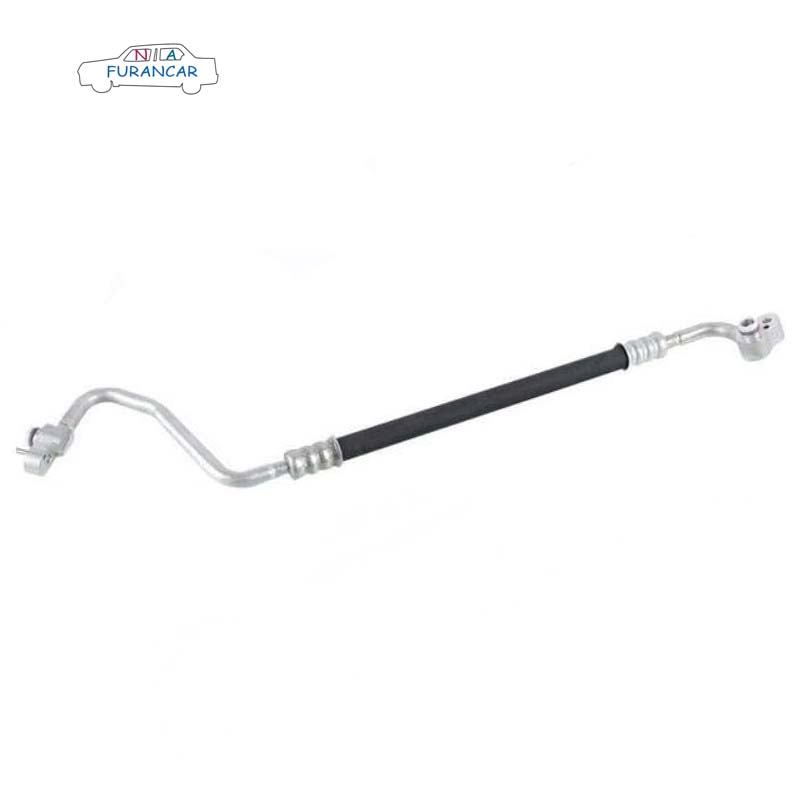
I. Definition of Wall Thickness in Automotive Air Conditioning Aluminium Tubing and Relevant Standards
1. Definition of wall thickness
From a physical perspective, the wall thickness of an aluminium tube refers to the distance between its outer and inner walls, which can be simply expressed by the formula: wall thickness = (outer diameter – inner diameter) / 2. However, in engineering applications, the definition of wall thickness extends far beyond this. It is a comprehensive engineering concept, primarily divided into the following two aspects:
Nominal wall thickness: This is the standard wall thickness value specified on design drawings for identification and ordering purposes. It is an idealised commercial specification, such as 1.0 mm, 1.5 mm, etc.
Minimum Allowable Wall Thickness: This is the thickness that the pipework must satisfy at its weakest point, as calculated from the design and taking into account all safety factors. Due to unavoidable dimensional deviations (tolerances) during the manufacturing process, the actual wall thickness of the product will vary from the nominal wall thickness. Therefore, the core objective of the design is to ensure that, even under the maximum negative tolerance, the actual wall thickness remains greater than or equal to the calculated minimum allowable wall thickness.
2. International automotive industry standards (SAE/ISO)
SAE (Society of Automotive Engineers): The SAE has published a large number of standards relating to automotive components. For example, SAE J2064 is a standard concerning high-quality air conditioning hoses,. Although no SAE standard specifically addressing the calculation of wall thickness for rigid aluminium tubing was found in the search results, relevant standards set out clear requirements for the system’s pressure rating and performance characteristics (such as pressure resistance). These requirements, in turn, influence the design inputs for wall thickness.
ISO (International Organisation for Standardisation): Similar to SAE, ISO also has standards relating to piping and pressure; for example, ISO 8434-2 defines the pressure ratings for pipe fittings. However, once again, no specific ISO standard has been found that directly addresses the calculation of wall thickness for aluminium tubing used in automotive air conditioning systems.
Overall, the definition of wall thickness for aluminium tubes used in automotive air conditioning systems is a multi-standard, multi-tiered process. It is guided by specialised standards such as T/QCKT 003-2011, whilst drawing on the design principles of general-purpose pressure piping standards such as GB/T 20801 and ASME B31.3 for specific calculation methods.
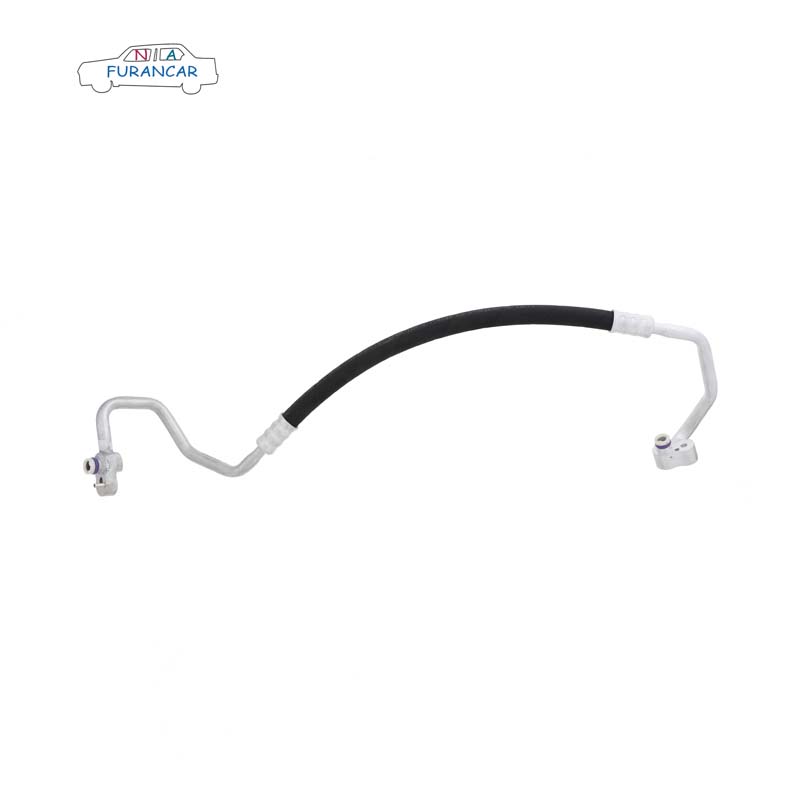
II. Theoretical Basis and Key Parameters for Wall Thickness Calculations
1. Core computational principles
An aluminium tube for automotive air conditioning is essentially a thin-walled cylinder subjected to internal pressure. The fundamental purpose of calculating its wall thickness is to ensure that the hoop stress generated in the tube wall material remains below the material’s allowable stress under all operating conditions.
The most fundamental and widely used calculation model is derived from the theory of thin-walled pressure vessels; its simplified formula (also known as a variant of the Barlow formula) is as follows:
δ = (P × D) / (2 × [σ]) + C
Where:
• δ (or t): The minimum wall thickness required for the calculation (mm)
• P: The design pressure of the piping (MPa)
• D: The outer or inner diameter of the piping (mm); this varies slightly depending on the specific formula used, but the outer diameter is typically employed for conservative calculations
• [σ] (or S): The allowable stress of the material at the design temperature (MPa)
• C: Wall thickness allowance due to factors such as corrosion, erosion or machining (mm); for internally clean air-conditioning systems, this value can usually be taken as 0
• More complex formulas, such as those provided in ASME B31.3, also introduce factors such as the weld joint factor (W), the mass factor (E) and the material-specific temperature correction factor (Y). t = (P × D) / (2 × (S × E × W + P × Y))
These factors make the calculation results more accurate and safer, but the basic principle remains unchanged.
2. Analysis of key input parameters
Accurate wall thickness calculations depend on precise input parameters.
Design Pressure (P):
Design pressure is one of the most critical input parameters in wall thickness calculations. It is not simply the average operating pressure of the system, but rather the most severe pressure value the system is likely to encounter over its service life, with a safety margin added to this value.
Pressure zones: A vehicle’s air conditioning system is divided into a high-pressure side and a low-pressure side. The high-pressure circuit (from the compressor outlet to the expansion valve) is subjected to higher pressures.
Pressure range:
• The operating pressure on the low-pressure side is typically between 0.15 and 0.25 MPa (1.5–2.5 bar).
• The operating pressure on the high-pressure side is typically between 1.3 and 1.7 MPa (13–17 bar), but varies significantly depending on factors such as ambient temperature, engine speed and refrigerant charge.
• Industry standards and practical testing indicate that the operating pressure on the high-pressure side should not be less than 3.5 MPa. Some standards even require a leak-free pressure hold test at 3.53 MPa.
Basis for selection:
Consequently, when calculating the wall thickness of high-pressure pipes, the design pressure (P) is typically set at a value significantly higher than the average operating pressure—for example, 4.0 MPa or even higher—to account for all possible transient peak pressures and to provide the safety margin required by standards.
Allowable stress ([σ] or S):
The allowable stress is the maximum stress a material can withstand without undergoing permanent deformation or failure. It directly reflects the material’s ‘resistance’.
Common materials:
Aluminium tubes for automotive air conditioning systems are typically made from aluminium alloys that offer good strength and machinability, such as 3103-H12, 6063-T6 and 6061-T6.
Strength criteria:
Allowable stresses are typically determined based on the material’s yield strength or ultimate tensile strength (UTS). Yield strength is the critical point at which a material begins to undergo plastic deformation; it is the more conservative and commonly used design criterion.
Mechanical Properties of 6061-T6: According to the data, the typical mechanical properties of 6061-T6 aluminium alloy are:
• Minimum yield strength: approx. 240–241 MPa (35,000 psi)
• Minimum ultimate tensile strength: approx. 290 MPa (42,000 psi)
Safety factor:
The allowable stress is not simply the yield strength; rather, it is calculated by dividing the yield strength by a safety factor (SF). The value of the safety factor depends on the criticality of the application, the uncertainty of the load, the consistency of material quality, and the requirements of the relevant standards; it typically ranges from 1.5 to 3.0. [σ] = Yield strength / Safety factor
Temperature effects:
The allowable stress of a material varies with temperature. Although the operating temperature range of air conditioning piping (-40°C to +125°C) has a relatively minor effect on the strength of aluminium alloys compared to steel, it is still necessary to consult the allowable stress data tables for the relevant materials at the design temperature when carrying out precision design work.
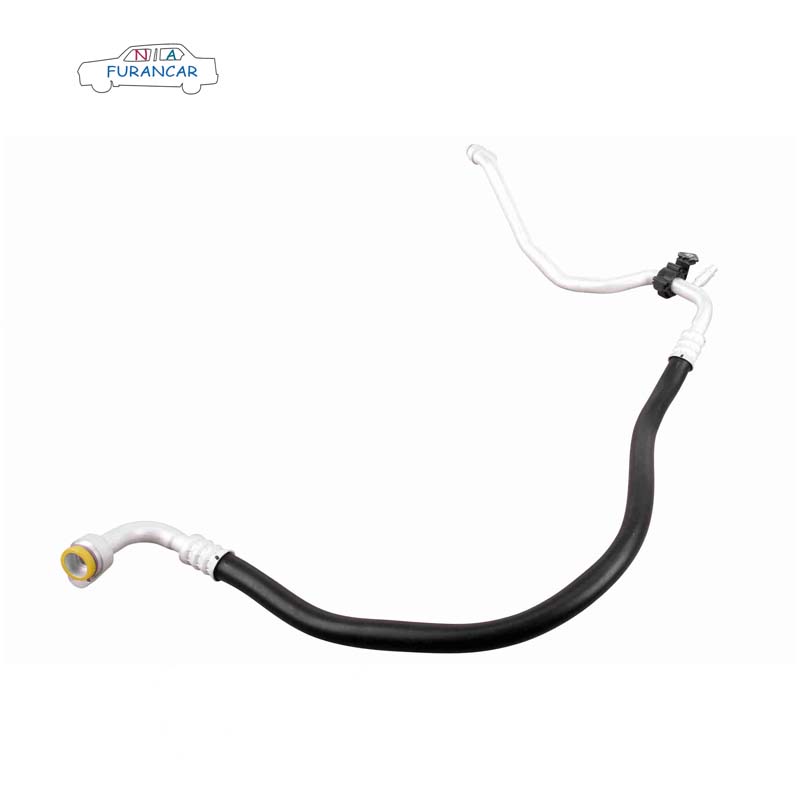
III. Example of the calculation process for the wall thickness of aluminium tubes in car air conditioning systems
1. Preliminary Remarks
Important Notice: Following a comprehensive analysis of the search results provided, no publicly available sources have been found that offer a complete, official example of aluminium tube wall thickness calculations for automotive air conditioning systems, including specific input data and output results. Such calculations typically form part of the internal core design processes and intellectual property of original equipment manufacturers (OEMs) or Tier 1 suppliers.
Consequently, this section will construct a logically rigorous and data-reasonable hypothetical calculation example based on the aforementioned theoretical foundations and data collated from search results. The aim is to clearly demonstrate the entire process of wall thickness calculation, rather than to provide a ‘standard answer’ that can be directly applied.
2. Calculation Scenario
Subject of calculation: Aluminium tubing on the high-pressure side of a passenger car air conditioning system.
Outer diameter (D) of the tubing: 12.0 mm (a common specification).
Tubing material: 6061-T6 seamless aluminium alloy tubing.
3. Selection and rationale for input parameters
Design pressure (P):
Basis: Given the significant fluctuations in operating pressure on the high-pressure side, and in accordance with industry standards requiring a pressure resistance of no less than 3.5 MPa, and to address pressure surges caused by system anomalies (such as cooling fan failure), we have selected a conservative design pressure.
Value: P = 4.2 MPa (this value is also close to the maximum operating pressure specified in QC/T 669-2019)
Allowable stress ([σ]):
Basis: The material is 6061-T6, which has a minimum yield strength of approximately 241 MPa at room temperature. Given the stringent safety requirements for automotive components and the complex operating conditions, such as vibration and thermal cycling, we have selected a relatively conservative safety factor (SF). We assume SF = 2.5.
Calculation and values:
[σ] = yield strength / SF = 241 MPa / 2.5 = 96.4 MPa
[σ] = 96.4 MPa
Other specifications:
Outer diameter (D): 12.0 mm
Corrosion allowance (C): As automotive air-conditioning systems are sealed, clean systems, the risk of internal corrosion is extremely low. Therefore, C is taken as 0 mm.
4. Calculation Procedure
Step 1: Select the calculation formula
For clarity, we shall use the simplified Barlow’s formula mentioned earlier, which is sufficient for preliminary engineering design:
Step 2: Substitute the values to perform the calculation
Substitute the selected parameters into the formula:
δ_min = (4.2 MPa × 12.0 mm) / (2 × 96.4 MPa) + 0
δ_min = 50.4 / 192.8
δ_min ≈ 0.261 mm
Step 3: Interpretation of Results
The calculated result, δ_min ≈ 0.261 mm, indicates that, in theory, for this aluminium tube to safely withstand the design pressure of 4.2 MPa, the wall thickness at any point must not be less than 0.261 mm.
5. Analysis of Results and Final Selection
The calculated value of 0.261 mm is merely the theoretical minimum wall thickness and must under no circumstances be taken directly as the final nominal wall thickness. The following key factors must also be taken into account: Manufacturing tolerances: During the extrusion or drawing process, there will be a certain degree of variation in the wall thickness of aluminium tubes. Assuming, in accordance with a certain standard (for example, T/QCKT 003-2011, for which specific values are unavailable), the wall thickness tolerance is ±10%. This implies that, to ensure the thinnest point is no less than 0.261 mm, the nominal wall thickness (t_nominal) must satisfy:
t_nominal × 0.9 ≥ 0.261 mm
t_nominal ≥ 0.261 / 0.9
In addition to strength, the wall thickness must also meet process requirements such as tube bending and joint connections (e.g. flaring, welding). Tubes with excessively thin walls are prone to wrinkling or cracking during bending.
Vibration fatigue resistance:
Automotive tubing is subjected to prolonged vibration, requiring sufficient wall thickness to resist fatigue failure. This is typically verified through extensive bench testing and CAE simulation, rather than through static pressure calculations alone.
Standardised Selection:
Aluminium tube manufacturers generally produce only standard specification series, such as 0.5 mm, 0.8 mm, 1.0 mm, 1.25 mm, 1.5 mm, etc.
Final decision:
Taking all the above factors into account, even if the calculated minimum wall thickness is only 0.29 mm (taking tolerances into account), the engineer would never opt for such an extreme wall thickness. Instead, they would select a wall thickness from standard specifications that not only meets the strength requirements but also strikes the optimal balance between manufacturability, fatigue resistance and cost. In this case, 1.0 mm or 1.25 mm would be more realistic and reliable nominal wall thickness options. This choice ensures a very high safety margin to account for dynamic loads and uncertainties not fully covered by the computational model.
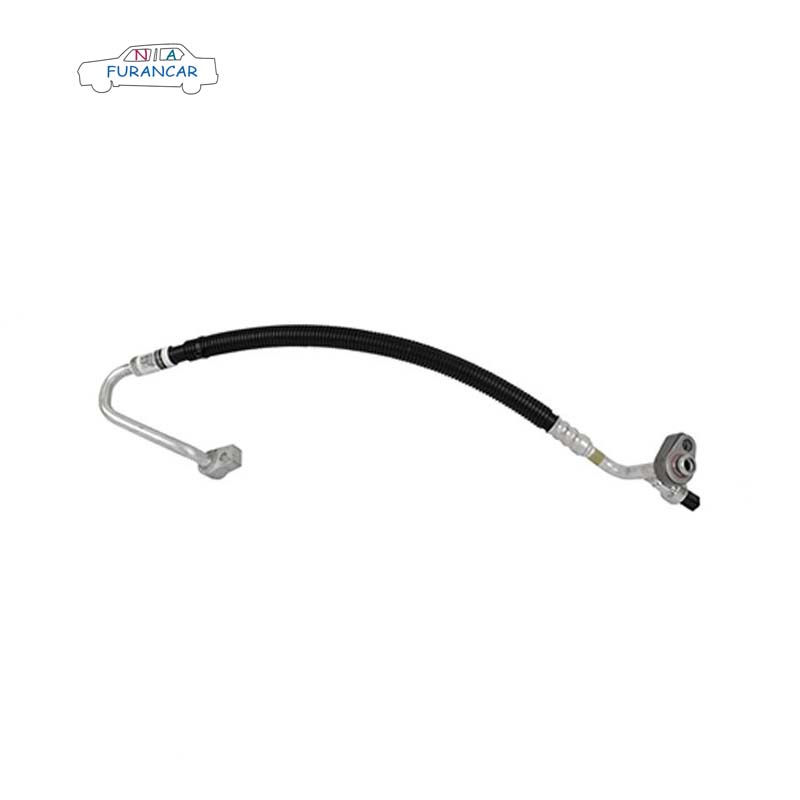
IV. Conclusions and Future Research Directions
The wall thickness of aluminium tubes for automotive air conditioning is not defined by a single numerical value, but is instead governed by specific standards such as ‘Aluminium Tubes and Assemblies for Automotive Air Conditioning’ (T/QCKT 003-2011), which specify general performance requirements. The minimum permissible values are determined through engineering calculations based on general pressure piping theory (e.g. GB/T 20801, ASME B31.3), and the minimum permissible values are determined through engineering calculations. The nominal values are ultimately selected by taking into account manufacturing processes, costs and standardised specifications.
Key elements of the calculation: The essence of wall thickness calculation lies in strength verification based on the principles of materials mechanics. The most critical input parameters are the design pressure (P) and the allowable stress of the material ([σ]). Determining these parameters requires a thorough understanding of the system’s operating conditions and the application of appropriate safety factors.
This study indicates that specific tables of wall thickness values, tolerance ranges and detailed official calculation examples are extremely difficult to obtain through public channels. This information largely constitutes the core technical assets of automotive manufacturers and component suppliers.
Combining theory and practice: The minimum wall thickness derived from theoretical calculations is merely the starting point for the design. The final selection of wall thickness is a comprehensive decision-making process that must take into account practical factors such as manufacturing tolerances, bending processes, resistance to vibration and fatigue, and standardised supply.


 Whatsapp :
  Tel :
Tel :  Email :